

Spending
How to Stop Impulse Buying: A Wait List and an Honest Count
Impulse buys are small on purpose. Each one is easy to defend, and only the month's total shows the damage. Make yourself wait, then count what got through.
Spending
Some purchases are about the mood, not the thing. You can't fix a mood with a spreadsheet, but you can find out when it happens, what it costs and what to do first.
If you want to know how to stop emotional spending, start by admitting the item hardly matters. The order goes in ten minutes after a hard meeting, or late on a night with nothing on, or on a good day you want to mark.
“Just don’t buy it” fails for that reason. The urge comes with a feeling, and the feeling is real. Three things help: learn when the urges come, put a short gap in front of the payment, and keep a record of what these purchases add up to. MoneyFlux only helps with the record.
It differs from plain impulse buying in one way: there is a mood behind it. An impulse buy can be a bargain that caught your eye. Emotional spending is the order you place because you feel flat, anxious, left out or tired. Good moods count too. A promotion, a birthday and a “treat yourself” Friday are all triggers.
Some tells that you are doing it:
None of these is a diagnosis. Nearly everyone has bought something to cheer themselves up. It only becomes a money problem when it happens often enough to show up in the monthly total.
Don’t start with a plan. Start with evidence. Go through your last month of purchases, in your bank app or in a tracker, and pick out ten you wish you hadn’t made. For each one, write three short things: what you felt, what time it was and where you were or what app you were in.
You are looking for repeats. An invented example: six of the ten happened after 9 p.m., five were in the same shopping app, and four came on days that began with a bad meeting. Say the ten cost $410 in all, and the five in that app cost $230 of it. That is useful. It tells you the fix is about evenings and one app, not about “being more disciplined”.
If you can’t remember the feeling, that is fine. The time and the merchant are often enough to guess.
You can’t remove the urge, so make paying slower than wanting. This is the same idea as in the guide to how to stop impulse buying, with two changes for mood-driven spending.
Take the places your list points to and make each one a little harder:
A pause by itself leaves the feeling with nowhere to go. Pick something that matches the mood before it hits, and write it where you will see it, such as a note on your lock screen.
Bored: a walk, or a task you have been avoiding for five minutes. Stressed: ten minutes outside, or a short call with someone you like. Tired: food and sleep, because a lot of “retail therapy” is a tired person on a sofa. Lonely: message someone, even with something small. Celebrating: pick a cheaper way to mark it, such as a meal at home, and decide the amount before the day.
For many people the first wave fades in about ten minutes. That is common experience, not a measured figure. If you still want the thing after that, buy it. That is a choice, and a fine one.
If you buy anyway, record it and move on. Skipping the record because you feel bad about it is the real loss, since the record is how you learn anything.
A record turns “I think I do this a lot” into a number. The rule is simple: when a purchase was mood-driven, say so in the note when you record it. Use one word, such as “stressed” or “bored”, plus a tag like #mood so you can find them later.
Tag every one, even the embarrassing ones. Say the total comes to $340 when you guessed $100. That gap is what you needed to find out.
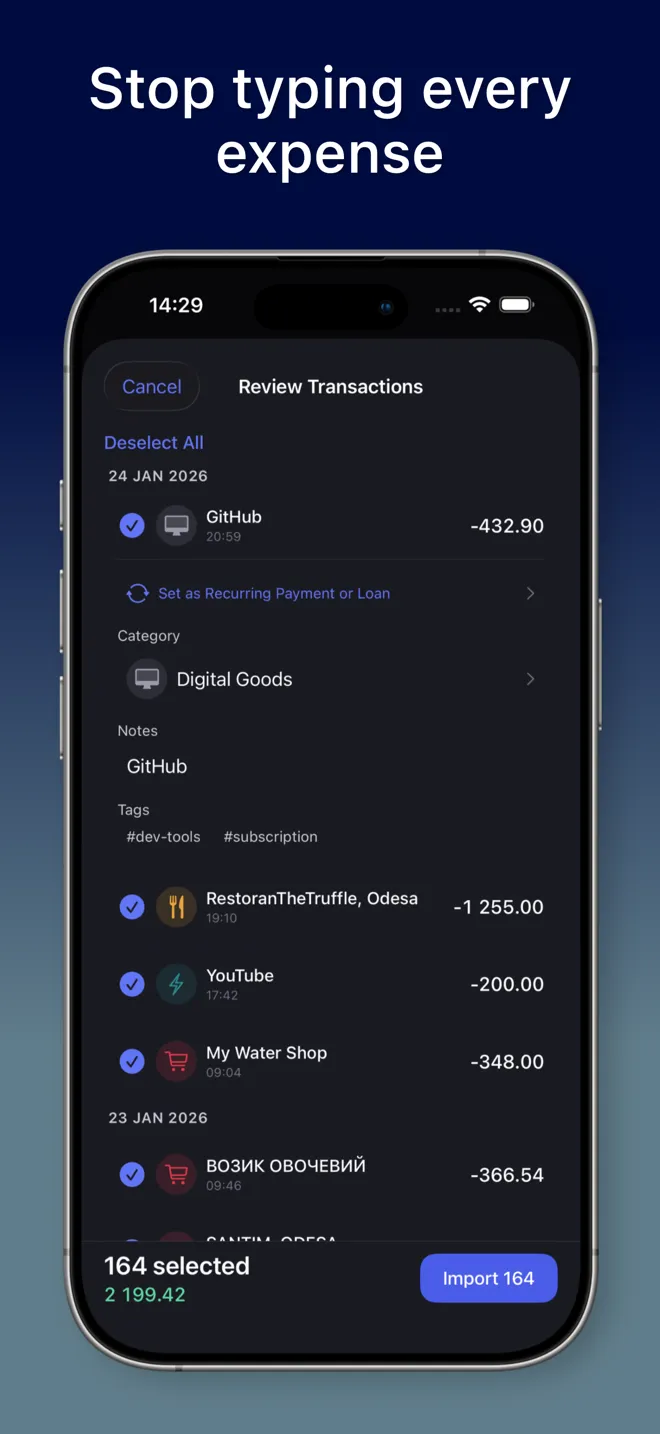
MoneyFlux lets you add a note and tags to any transaction. On the statement review screen you can recategorize a row, add a note or tag, or skip it before it is saved, so a weekly or monthly import is a good moment to tag the mood purchases while you still remember them. The guide to importing a bank statement instead of typing every expense covers the steps.
For in-store purchases there is a faster route. A Shortcuts automation on iPhone can log a contactless Apple Pay payment right after the tap, with amount, merchant and card, tagged #applepay. It covers in-store contactless payments only, not online orders. The setup is in logging Apple Pay purchases automatically with Shortcuts. Open the entry later and add your word.
Once a month, find the tagged transactions, add up the amounts, count the purchases and look at the days. Filtering Analytics by tag is Premium.
Try it in MoneyFlux: open your last import, find the three purchases you can only explain by mood, and add the note “mood” and the tag #mood to each. Next month, total the tag.
A tracker shows the cost. It does not feel the urge for you, set a budget, block a payment or send you a warning when you are about to spend. The pause and the substitute have to come from you, and they take a few weeks to feel normal.
A single month is thin evidence too. One bad week can double the number, so give it two or three months before you decide whether the habit moved.
And some spending is not a habit problem. If you feel unable to stop, if you hide purchases, if it is putting you in debt, or if low mood is behind most of it, a counselor or doctor is a better first call than any app. A nonprofit credit counselor can help with the debt itself. Ask early, before the balance grows.
Cutting mood purchases only helps if the saved amount has somewhere to go. Even a small monthly sum works, and the savings goal calculator guide shows how to turn it into an amount and a date. If your spending is leaking in more places than one, how to stop overspending covers finding the category.
This is general information, not financial or medical advice.
Buying something mainly to change how you feel, rather than because you need it. Common moods are stress, boredom, loneliness, tiredness and also celebration. The purchase gives a quick lift and then the mood, and often a bill, comes back.
Look at your last month of purchases and mark the ones you can't explain except by mood. If the same feeling, time of day or app shows up several times, there is a pattern. Spending after a bad day, or when you are bored with a phone in hand, are the usual signs.
Interrupt it before you pay. Close the tab, leave the shop, or put the item on a list and look again tomorrow. Then do something else for ten minutes that matches the mood: move, eat, call someone or go outside.
No app can stop you paying. A tracker shows you what the habit costs and when it happens, which helps you plan around it. MoneyFlux does that, but it does not block purchases, set budgets or send spending alerts.
If you feel unable to stop, hide purchases from other people, or the spending is causing debt or distress, talk to a doctor, a counselor or a nonprofit credit counselor. A tracker and a few habits are not enough for that, and asking for help is a sensible first step.